

In the culinary world, it’s easy to focus on the front of house or the flash of custom knives and high-end ranges. But ask any seasoned operator and they’ll tell you the same thing: real kitchen efficiency happens behind the scenes. To kick off our new featured digital series, “The Equipment I Can’t Live Without,” our Director of Marketing & E-Commerce, Megan Keiswetter, sat down for a virtual Q&A with Chef David Ash, Director of Culinary Operations at Zink Foodservice.
David has spent more than 30 years in the industry. He has run fine dining kitchens as an executive chef, spent several years as a corporate chef at an equipment manufacturer, and built competition kitchens for the ACF and Bocuse d’Or. Today he helps multi-unit operators across the Midwest tighten their workflows and get more out of smaller footprints.
Below, David talks through how he came up in the kitchen, his firm opinions on a few culinary debates, the equipment he would keep if he had to strip a kitchen down to the basics, and why back-of-house organization decides whether a service holds together.
From the Dish Pit to Director: A Mentored Journey
Most chefs can point to the moment they get hooked on kitchen life. For David, it started at 15, when he needed a signed permission slip from his parents just to run the clam shell grill at McDonald’s. By 17 he knew this was what he wanted to do.
He started at the bottom, washing dishes and then prepping at a new restaurant opening in Cleveland, and moved up fast.
“I was planning to go to culinary school, but I got promoted to Sous Chef pretty quickly, and by 21 I was named Executive Chef,” David says. After years running high-volume fine dining kitchens, he brought that experience to Zink Foodservice, where he has spent the last 14 years.
Kitchen Debates and Backyard Smoke Breaks
The culinary world loves a good debate, and David has a few hills he is willing to die on:
- Breaking the rules: “Would I eat pineapple on a pizza? Not a chance! It’s not even my top 10 favorite ingredients. How should a steak be cooked? However you want! Plus, it depends on the cut. You want to put steak sauce on your steak? Go for it!”
- The bread-to-meat ratio: “Get brioche buns off hamburgers! If the amount of bread is twice the amount of meat, get it out of there! Anything between bread shouldn’t have more bread than filling.”
- Truffle oil: “Nope. It’s garbage. Throw it out!” he jokes. “If you want to shave some truffle on those fries, go for it, but it better be expensive stuff. I was guilty of jumping on the truffle oil trend. I used it in the past. But it’s just so overplayed.”
- A brush with a legend: “I was standing in the back alley of a convention center once, ready to have a cigarette, and realized I didn’t have a lighter. A hand reaches out with a flame, and I look up. It’s Anthony Bourdain. Not even kidding! I asked him if it sucked not being able to walk down the street without being bothered. He told me most people didn’t recognize him back then but joked that a lady had just asked him to sign a Food Network cookbook. Since he was never on that network and liked to have fun, he signed it: ‘The best sex I ever had, Bobby Flay.’ He was an incredible humanitarian and a true original with a great sense of humor.”

The Bare-Bones Five: The Core Back-of-House
We asked David a hypothetical: if a crisis forced him to strip the back of house down to the bare minimum just to keep the doors open, what survives? His five picks all come down to versatility, labor savings, and food preservation:
- The combi oven: “It’s the most versatile piece of cooking equipment in the world, honestly. No matter what the menu item is, I could make it work. Best of all? It cleans itself, saving precious labor hours.”
- A six-burner range and griddle combo unit: “An unchanged industry classic for a reason. You can sauté, make sauces, simmer soups. It does it all.”
- A commercial fryer: “Because let’s face it, there is nothing you can’t fry to make it taste good.”
- A commercial dish machine: “Because absolutely nobody wants to manually wash a high-volume dinner rush in a 3-compartment sink.”
- A walk-in cooler and freezer combo with ample storage: “I’m cheating a bit by counting it as one, but you have to prioritize reliable food preservation and secure ingredient storage to keep food safe.”
The Unsung Hero of Daily Survival
When we asked about the single most overlooked piece of infrastructure, David didn’t hesitate. It isn’t a flashy cooking platform. It’s the ware washing station.
“I will say this until my last breath: it’s the dish machine, dish storage, and that entire ware washing area. It is the most crucial component in a commercial kitchen layout. If the dishwasher breaks down or a staff member doesn’t show up, you cannot get caught up, and the entire dinner service collapses.”
Kitchen Choreography
A good dinner rush runs on choreography and zero wasted movement. “If the smallest thing is out of place, even one pan, it throws off the entire flow,” David explains.
He learned the value of vertical space the hard way, at an operation where dry storage sat down in a basement.
“Vertical space becomes everything. It’s like Lincoln Logs and building blocks on steroids. That’s where a manufacturer like New Age Industrial comes in, because nobody in my entire 30-year career has ever come to me and said, ‘Chef, I just have too much storage space.’”
To bridge prep hours and production hours, David leans on 2-tier and 3-tier aluminum utility carts as mobile storage stations that adapt to shifting line demands on the fly.
Equipment Built for Abuse: Material Selection and Fast Clean-Ups
Food safety is the foundation of any reputable kitchen, but deep cleaning takes real labor. When sourcing storage, material handling, organization, and transport equipment, David looks for rigid metals like heavy-duty aluminum and stainless steel that hold up to constant motion and heavy loads and wipe down easily.
“Commercial kitchen crews treat gear like a rental car,” David notes. “If it’s breakable, someone will find a way to break it. You need sanitary, heavy-duty equipment that can take real abuse and clean up fast.”
His number one rule for layout design? Put everything on high-quality casters. “Put everything you can on wheels. It’s the little things that make the biggest difference for food safety inspections. If you have a fully loaded can rack that isn’t mobile, good luck getting down on your hands and knees to clean behind it.”

Bringing the Station to Equipment: The New Age Advantage
In his role overseeing Zink’s Culinary Centers, David hosts multi-unit operators who manage huge volumes of inventory for testing. He can’t redesign the test kitchen’s footprint for every visiting brand, so mobile flexibility matters.
“New Age Industrial completely owns the storage and handling space, whether it’s different pan rack configurations, ingredient bin dollies, or shelving solutions. What I love about New Age equipment is that it brings the station to the equipment. Because the aluminum units are built strong but stay lightweight and mobile on casters, we can put together custom workstations on the fly using speed racks, aluminum utility carts, and picking carts. It saves my team from lugging heavy cases of food across the room.”
Industry Reality vs. Pop Culture Romance
Pop culture hits like The Bear and Burnt lean hard into kitchen chaos, but David says the day-to-day reality of a Culinary Director looks different. (Fun fact: David thinks the animated movie Ratatouille is the single most accurate depiction of a chef’s life.)
“The most misunderstood part of a chef’s role is how much cooking you don’t actually do,” David laughs. “People think ‘chef’ just means making up recipes and cooking all day. A huge amount of time goes into R&D, laying out workflows, menu development, managing service calls, and coordinating tech. You’re keeping a lot of moving parts in sync at once, and that takes real people skills.”
Designing from the Inside Out: Advice for Future Operators
With rising real estate costs and shrinking footprints, commercial kitchens keep getting tighter. David’s advice to up-and-coming operators is simple: stop overspending on flashy cook-lines and front-of-house looks while neglecting your core material handling infrastructure.
“Your staff and food trends are going to change from day one, so your storage, transport, and workflow equipment has to be flexible enough to shift with the industry. Instead of buying fixed, single-use elements, find where your storage belongs first and build the kitchen around it. Whatever you think you need for storage, make it bigger. Design and budget are two different things, but consistency, modularity, and mobility are what keep a restaurant open for the long haul.”
About Our Partner: Zink Foodservice
At New Age Industrial, we know that top-tier equipment is only half the equation. You also need the right expertise to bring a commercial space to life. That’s why we’re proud to partner with Zink Foodservice, one of the premier manufacturers’ representative agencies.
For over four decades, Zink has been a trusted name in the food service industry, offering equipment portfolio representation, facility design services, and operational consulting across the Midwest.
Experience Innovation: State-of-the-Art Culinary Centers
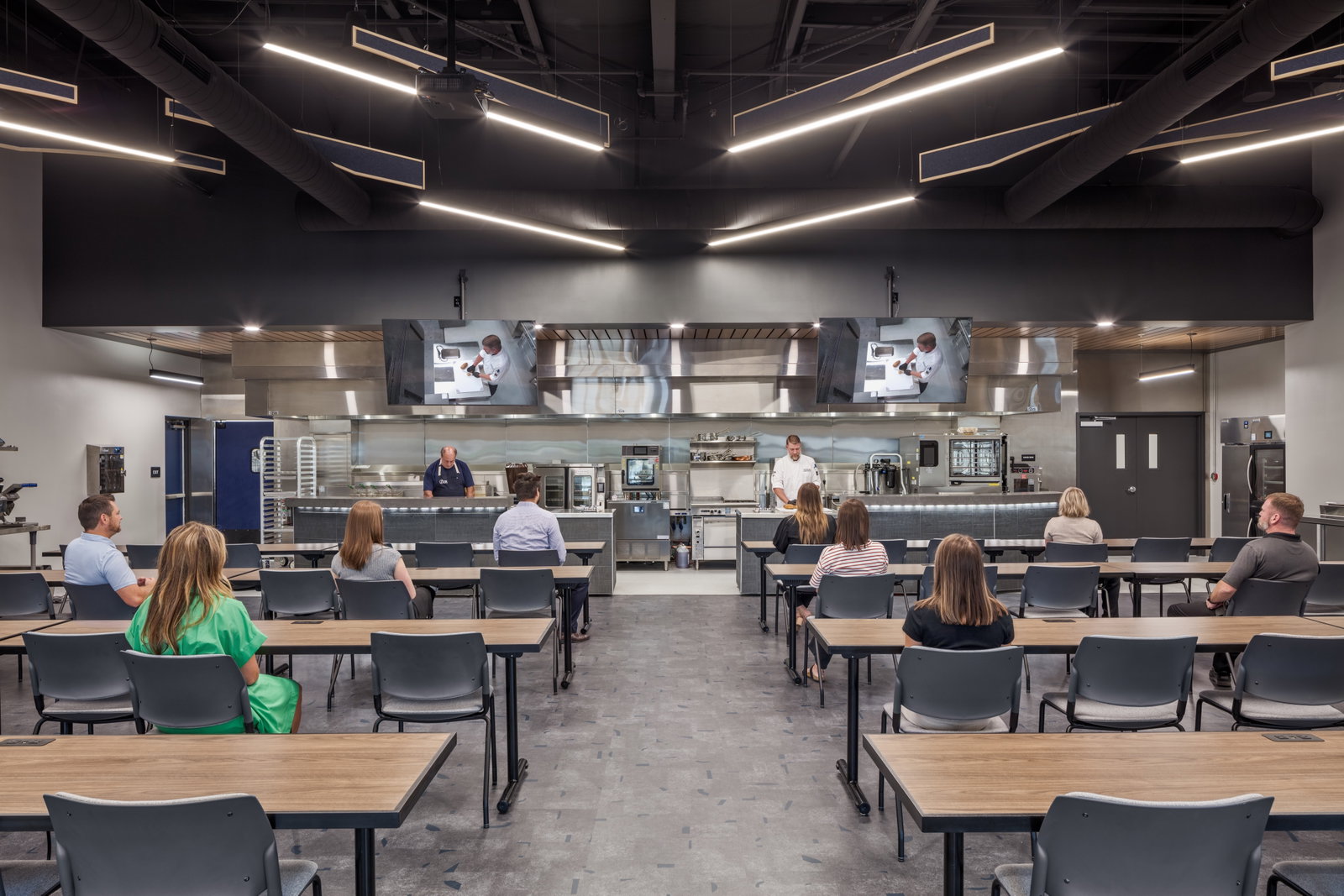
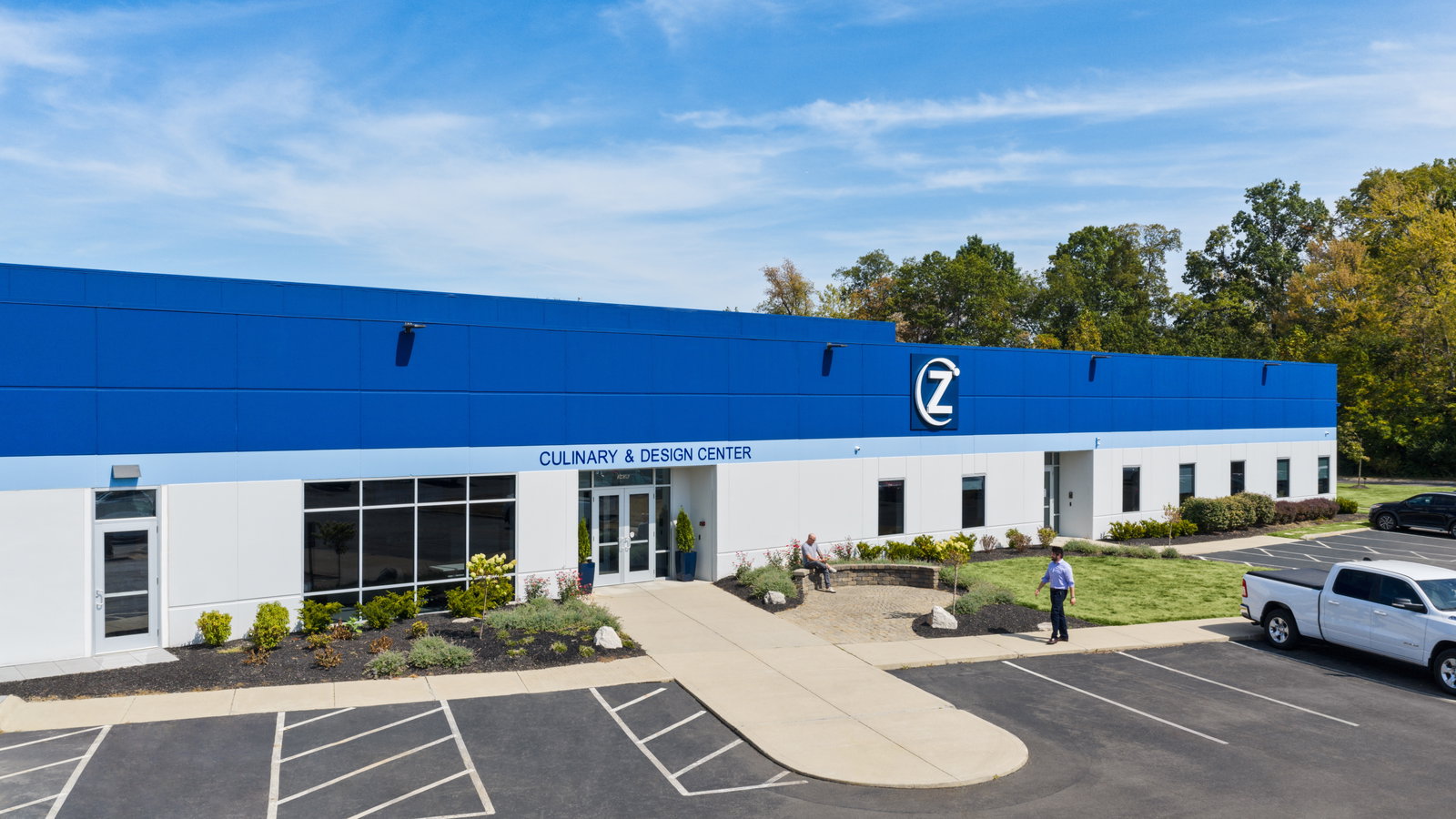
Zink doesn’t just sell equipment. They let operators put it to work first. Their Culinary & Design Centers feature fully functional test kitchens where chefs, school nutrition directors, and multi-unit chains can experiment with menus and layout workflows before making a single capital investment.
Whether you need to test the hold-times of an enclosed cabinet or see how mobile, lightweight aluminum equipment performs on a fast-casual prep line, Zink’s spaces are built for hands-on work. You’ll find these facilities across the Midwest, including:
- Ohio: Columbus (Corporate HQ and Center), Cleveland, and Cincinnati
- Indiana: Indianapolis
- Illinois: Chicago
- Michigan: Detroit
- Kentucky: Louisville
By connecting equipment manufacturing with real-world culinary execution, the team at Zink Foodservice helps make sure back-of-house operations are ready for the dinner rush.
Connect and Follow Our Teams
Stay up to date with the latest innovations, workflow tips, and behind-the-scenes footage by connecting with us and our partners on social media.
Follow New Age Industrial
- Facebook: @NewAgeIndustrial
- LinkedIn: @New Age Industrial Corp Inc
- Instagram: @newageindustrial
Connect with Zink Foodservice To learn more about optimizing your commercial kitchen workflow or to explore their culinary testing spaces, browse the digital Zink Culinary & Design Centers Flipbook or visit the Zink Foodservice Website.
Follow Zink Foodservice
- Facebook: @ZinkFoodservice
- LinkedIn: @Zink Foodservice
- Instagram: @zinkfoodservice
Watch Chef David Ash in Action Want to see Chef David Ash’s expertise in action? Watch this training video on commercial equipment and workflow solutions: Watch Chef David Ash Demonstrate Equipment Solutions.


